

Antibiotic resistance has become one of the most serious challenges in modern medicine due to the rapid emergence and spread of resistant bacterial pathogens. Resistance is often linked to the excessive or inappropriate use of antibiotics in humans and animals. While this explanation is partly correct, especially for resistance caused by mutations within pathogenic bacteria, many resistance mechanisms are actually acquired from other bacterial species through horizontal gene transfer.
This transfer of resistance genes between unrelated bacteria has raised important scientific questions about the origin, evolution, and ecological distribution of antibiotic resistance genes. Researchers aim to understand where these genes originally came from, how they evolved, and how they became widespread among pathogenic bacteria.
Several hypotheses have been proposed regarding the origin of resistance genes. Some scientists suggest that antibiotic-producing microorganisms naturally carry resistance genes to protect themselves from their own antibiotics. Others propose that non-antibiotic-producing soil bacteria developed resistance after long-term exposure to naturally occurring antibiotics in the environment. Phylogenetic and genomic studies are now widely used to reconstruct the evolutionary history of these resistance genes and trace their movement across bacterial populations.
DNA Contamination in Antibiotic Preparations
More than three decades ago, researchers discovered that some antibiotic-producing bacteria contained enzymes capable of inactivating antibiotics. These enzymes were very similar to those later identified in antibiotic-resistant clinical pathogens.
Subsequent studies revealed that many commercial antibiotic preparations contained detectable traces of bacterial DNA. In some cases, this DNA included antibiotic resistance genes originating from the antibiotic-producing strains themselves. Scientists initially suspected that bacteria could acquire resistance by taking up this contaminating DNA from antibiotic products.
Further molecular investigations confirmed that residual DNA was present in numerous antibiotics used in both medicine and research laboratories. However, experiments attempting to demonstrate successful gene transfer under real-life conditions produced limited evidence. These findings suggest that DNA contamination in antibiotic preparations is unlikely to represent a major pathway for the widespread dissemination of resistance genes in natural or clinical environments.
Phylogenetic Analysis of Antibiotic Resistance Genes
Horizontal gene transfer events that occurred millions of years ago are difficult to reproduce experimentally because scientists do not fully know the environmental conditions, bacterial species, or genetic mechanisms involved. Instead, researchers rely on phylogenetic analysis to investigate the evolutionary history of resistance genes.
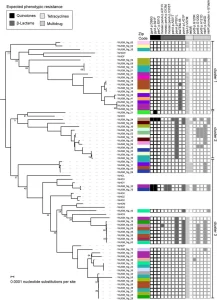
Phylogenetic studies of tetracycline resistance genes demonstrated that these genes diversified long before the modern antibiotic era. Researchers identified multiple evolutionary branches that evolved independently over extended periods of time. Importantly, these analyses found little evidence that antibiotic-producing bacteria directly transferred resistance genes to human pathogens.
Additional studies involving environmental microbiota uncovered a large diversity of tetracycline resistance genes in uncultivated bacteria from soil ecosystems. Some of these environmental genes may represent ancestral forms of resistance genes that were later acquired by pathogenic bacteria.
Similar phylogenetic patterns were observed for several other important resistance gene families, including:
- Macrolide resistance genes
- Vancomycin resistance operons
- Beta-lactamase enzymes
- Quinolone resistance genes
These findings support the idea that environmental bacteria, particularly soil microorganisms, serve as major reservoirs of antibiotic resistance genes.
Evolution of Vancomycin Resistance
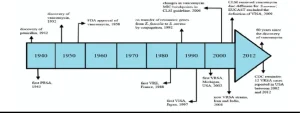
Vancomycin was once considered a last-resort antibiotic for treating severe infections caused by gram-positive bacteria. However, resistant organisms such as vancomycin-resistant enterococci and resistant strains of Staphylococcus aureus rapidly emerged.
The primary mechanism of vancomycin resistance involves modification of bacterial cell wall synthesis pathways. Resistant bacteria replace normal peptide structures with alternative molecules that prevent vancomycin binding.
Phylogenetic analyses of vancomycin resistance genes revealed that these genes likely originated in environmental soil bacteria rather than in antibiotic-producing microorganisms. Over time, the resistance operons diversified and eventually spread into intestinal bacteria through mobile genetic elements such as transposons.
The environmental reservoir of vancomycin resistance genes is now recognized as extensive and highly diverse, creating an ongoing risk for future dissemination into clinically important pathogens.
Ancient Origin of Beta-Lactamases
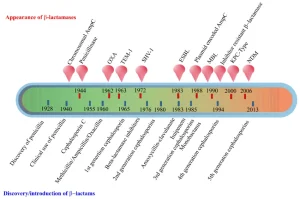
Beta-lactam antibiotics are among the most widely used antimicrobial drugs worldwide. Resistance to these antibiotics is primarily mediated by beta-lactamase enzymes, which deactivate antibiotics by breaking the beta-lactam ring structure.
Structural and phylogenetic studies have demonstrated that beta-lactamases are extremely ancient enzymes that evolved billions of years ago. Many beta-lactamase genes existed long before humans began using antibiotics in medicine.
Environmental metagenomic studies have identified a remarkable diversity of beta-lactamase genes in soil, marine sediments, and other natural ecosystems. These findings indicate that antibiotic resistance is a natural ecological phenomenon that predates clinical antibiotic use.
Quinolone Resistance and Environmental Reservoirs
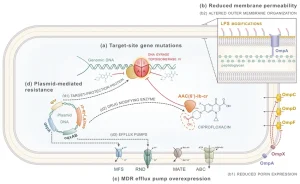
Quinolones are synthetic antibiotics that do not naturally occur in the environment. Initially, resistance to quinolones mainly resulted from chromosomal mutations affecting DNA gyrase or membrane permeability.
Later, scientists discovered plasmid-mediated quinolone resistance genes known as qnr genes. These genes encode proteins that protect bacterial DNA gyrase from quinolone inhibition.
Phylogenetic analysis revealed that many qnr-like genes are widely distributed among environmental aquatic bacteria. These environmental genes likely served as the evolutionary precursors of resistance genes later acquired by pathogenic bacteria.
The spread of qnr genes illustrates how environmental microorganisms can act as reservoirs of resistance even for synthetic antibiotics.
Functional Roles of Resistance Genes Before the Antibiotic Era
One important question concerns why resistance genes existed before the widespread use of antibiotics. Researchers now believe that many resistance-associated proteins originally served other essential cellular functions.
Examples include:
- Ribosomal methylases involved in ribosome assembly and quality control
- Metallo-beta-lactamases participating in DNA repair and metabolic processes
- Pentapeptide repeat proteins contributing to chromosome organization and DNA topology
These proteins later evolved secondary functions that allowed bacteria to resist antibiotics.

Horizontal Gene Transfer During the Antibiotic Era
Although many resistance genes are ancient, their rapid dissemination among pathogens is largely a recent phenomenon accelerated by human antibiotic use.
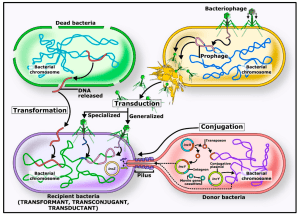
Resistance genes can spread through several mechanisms:
- Transformation involving uptake of free DNA
- Conjugation mediated by plasmids and transposons
- Bacteriophage-mediated transduction
Mobile genetic elements such as integrons, conjugative plasmids, and transposons have greatly accelerated resistance dissemination across bacterial populations.
Genes such as tet and erm are now commonly found in bacteria from the human intestine, oral cavity, animal microbiota, and environmental ecosystems, demonstrating extensive gene exchange between microbial communities.
Environmental Factors Promoting Resistance Dissemination
Antibiotic Overuse
The excessive use of antibiotics in medicine, agriculture, aquaculture, and animal production creates strong selective pressure favoring resistant bacteria. Even after antibiotic exposure decreases, resistance genes often persist because bacteria can adapt to reduce the metabolic cost associated with resistance.
Heavy Metals and Co-Selection
Resistance genes are frequently located on genetic elements that also carry heavy metal resistance genes. Exposure to metals such as mercury or copper can therefore indirectly select for antibiotic resistance.
Studies have shown that bacteria living in metal-contaminated soils and aquatic environments often display increased resistance to multiple antibiotics.
Sub-Inhibitory Antibiotic Concentrations
Low antibiotic concentrations that do not kill bacteria can still stimulate horizontal gene transfer. Experimental studies demonstrated that subtherapeutic antibiotic levels significantly increase conjugative transfer of resistance-carrying plasmids and transposons.
This phenomenon has been observed both in laboratory experiments and in animal intestinal ecosystems.
Stress-Induced Gene Transfer
Certain environmental stresses activate bacterial SOS responses, which increase mutation rates and stimulate horizontal gene transfer. Some antibiotics themselves can induce this stress response, thereby promoting additional resistance dissemination.
Ecology of the Environmental Resistome
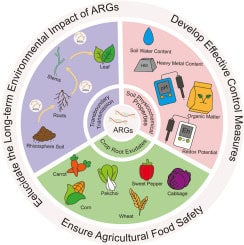
The environmental resistome refers to the complete collection of antibiotic resistance genes present in natural ecosystems.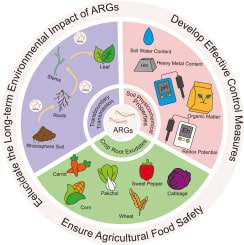
Major reservoirs include:
- Soil microbiota
- Aquatic environments
- Animal intestinal ecosystems
- Agricultural environments
- Wastewater systems
Environmental genomics and metagenomics have revealed that these ecosystems contain enormous resistance gene diversity. Many of these genes remain poorly characterized and may represent future clinical threats.
Understanding the environmental resistome is essential for predicting emerging resistance mechanisms before they appear in pathogens.
Public Health Implications
The emergence of antibiotic-resistant bacteria severely threatens the effectiveness of modern antimicrobial therapy. Research integrating microbiology, evolutionary biology, and ecology has transformed our understanding of resistance evolution.
Current evidence strongly suggests that:
- Environmental bacteria represent the main reservoir of resistance genes
- Horizontal gene transfer drives rapid dissemination
- Human antibiotic use accelerates resistance evolution
- Resistance genes can persist even without ongoing antibiotic exposure
These findings highlight the importance of responsible antibiotic stewardship and environmental monitoring.
Several countries have already restricted the use of antibiotics as animal growth promoters in agriculture to reduce selective pressure and slow the spread of resistance.
Conclusion
Antibiotic resistance is not simply a modern medical problem but an ancient ecological phenomenon shaped by billions of years of microbial evolution. Environmental bacteria contain a vast and highly diverse reservoir of resistance genes that can be mobilized into pathogenic organisms through horizontal gene transfer.
Modern antibiotic overuse has dramatically accelerated this process by increasing selective pressure and promoting gene exchange between microbial ecosystems. Environmental factors such as heavy metals, low antibiotic concentrations, and stress responses further contribute to resistance dissemination.
Future research combining phylogenetics, environmental genomics, and microbial ecology will be essential for identifying emerging resistance threats and developing effective strategies to preserve antibiotic efficacy for future generations.