The Importance of Microbial Proxies in Water Quality Monitoring

Freshwater ecosystems such as rivers, lakes, and streams are essential sources of drinking water and play a major role in public health, agriculture, industry, and recreational activities. Rapid urbanization, industrial development, and population growth have significantly increased pressure on these water resources. As a result, contamination from sewage discharge, toxic chemicals, nutrient overload, and harmful algal blooms has become a major environmental concern worldwide.
To evaluate water safety and ecosystem health, environmental monitoring programs commonly use microbial and biological indicators known as proxies. These proxies are measurable organisms or biological signals that indirectly reflect the presence of harmful contaminants such as pathogens, toxins, or chemical pollutants. Microbial indicators and aquatic macroinvertebrates are widely applied in water quality surveillance because they provide early evidence of environmental disturbance and potential public health risks.
Traditionally, water quality assessment has relied on the detection of fecal indicator bacteria (FIB), including:
- Escherichia coli
- Enterococci
- Total coliform bacteria
These microorganisms are abundant in human and animal feces, making them useful indicators of sewage contamination. Their detection in freshwater environments often correlates with the potential presence of pathogenic microorganisms responsible for waterborne diseases.
However, conventional microbial indicators have important limitations. Fecal bacteria may originate from non-human sources such as livestock or wildlife, reducing their specificity for human sewage contamination. Environmental conditions can also influence their survival and abundance, decreasing their reliability as predictive markers for pathogen exposure.
Transition from Culture-Based Methods to Molecular Water Monitoring
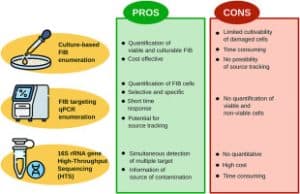
For many decades, culture-based microbiological techniques represented the standard approach for monitoring microbial water safety. These methods involve growing microorganisms on selective laboratory media followed by biochemical or serological confirmation.
Although culture methods remain widely used, they present several major drawbacks:
- Long processing times
- Low sensitivity for slow-growing organisms
- Inability to detect certain intracellular pathogens
- Failure to identify viable but non-culturable (VBNC) microorganisms
The VBNC state is particularly important in environmental microbiology because many pathogenic bacteria remain infectious despite being undetectable using conventional cultivation techniques.
To overcome these limitations, cultivation-independent molecular methods were developed. These approaches analyze microbial DNA directly from environmental samples without the need for laboratory culture.
One of the most important molecular targets in microbial ecology is the small subunit ribosomal RNA gene.
16S rRNA and 18S rRNA
The 16S rRNA gene is widely used for bacterial identification, while the 18S rRNA gene is applied for eukaryotic microorganisms. These genes contain both conserved and hypervariable regions, enabling taxonomic classification across diverse microbial communities.
Molecular methods including:
- Polymerase Chain Reaction (PCR)
- Quantitative PCR (qPCR)
- Digital PCR
- DNA sequencing
have dramatically improved the detection and quantification of microbial contaminants in freshwater systems.
Role of Next-Generation Sequencing (NGS) in Water Quality Assessment
The emergence of Next-Generation Sequencing has transformed environmental microbiology and water quality research.
NGS technologies enable massively parallel sequencing of microbial DNA, allowing researchers to characterize entire microbial communities present in water samples. Instead of targeting only a few organisms, NGS provides a comprehensive overview of microbial diversity, ecological interactions, and functional genes.
Applications of NGS in water monitoring include:
- Detection of sewage contamination
- Identification of microbial source markers
- Surveillance of pathogenic microorganisms
- Monitoring harmful algal blooms
- Tracking antibiotic resistance genes
- Studying pollutant biodegradation
- Characterizing drinking water microbiomes
NGS-based microbial profiling commonly targets hypervariable regions of the 16S rRNA gene such as:
- V1 region
- V3 region
- V4 region
- V6 region
Other functional genes associated with ecological processes like nitrogen fixation and denitrification are also used in environmental sequencing studies.
Major NGS Platforms Used in Environmental Microbiology
Several sequencing technologies have been adopted for microbial water analysis.
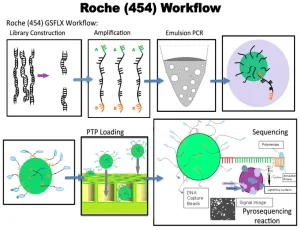
Roche 454 Pyrosequencing
Early environmental sequencing studies heavily relied on Roche 454 pyrosequencing because of its relatively long read lengths and mature bioinformatics workflows.
Advantages included:
- Longer sequencing reads
- Improved taxonomic resolution
- Better characterization of microbial communities
However, this platform was eventually discontinued.
Illumina Sequencing Platforms
Illumina sequencing systems, especially the MiSeq platform, rapidly became the dominant technology for environmental microbiology.
Key advantages include:
- High sequencing depth
- Lower operational costs
- Improved sensitivity
- Better accuracy
- Paired-end sequencing capability
Illumina MiSeq sequencing is now widely used for shotgun amplicon sequencing and metagenomics studies related to freshwater microbiomes.
Emerging Long-Read Sequencing Technologies
New long-read sequencing systems are creating additional opportunities for real-time environmental monitoring.
These include:
- Pacific Biosciences
- Oxford Nanopore Technologies
Nanopore sequencing technologies are especially promising because they offer:
- Portable sequencing devices
- Real-time sequence analysis
- Very long read lengths
- Potential integration into environmental biosensors
These systems may eventually support on-site, real-time microbial water quality monitoring.
Bioinformatics and Microbial Community Analysis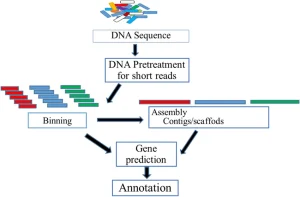
NGS generates extremely large datasets requiring advanced bioinformatics analysis.
Several open-source software platforms are widely used for environmental sequencing analysis:
- QIIME
- MOTHUR
These tools perform:
- Sequence quality filtering
- Chimera removal
- Taxonomic assignment
- Community diversity analysis
- Statistical comparisons
Microbial sequences are commonly grouped into Operational Taxonomic Units (OTUs) based on sequence similarity thresholds.
Advanced methods such as oligotyping and Minimum Entropy Decomposition (MED) allow analysis at single nucleotide resolution, improving discrimination between closely related microbial populations.
Challenges and Limitations of NGS-Based Water Monitoring
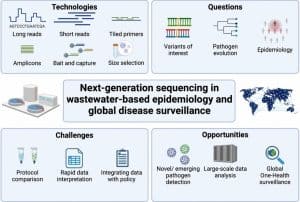
Despite its advantages, NGS technology still faces important technical and analytical limitations.
PCR Amplification Bias
PCR-based sequencing can introduce biases due to:
- Primer selection
- GC content variation
- Secondary DNA structures
- Unequal amplification efficiency
These factors may distort estimates of microbial abundance.
Sequencing Errors and Chimera Formation
Sequencing artifacts can artificially inflate microbial diversity estimates and generate false operational taxonomic units.
Bioinformatic processing methods strongly influence final results, making laboratory standardization essential.
Difficulty in Quantitative Interpretation
Unlike qPCR, which provides absolute gene copy numbers, standard amplicon sequencing is generally considered semi-quantitative rather than fully quantitative.
Several factors influence abundance estimates:
- PCR cycle number
- Sequencing platform
- Library preparation methods
- rRNA gene copy number variation
However, studies show that NGS still provides a reasonable approximation of microbial community composition.
NGS Applications in Water Quality Research
Detection of Human Sewage Contamination
NGS studies have identified microbial taxa strongly associated with human sewage systems.
Important sewage-associated groups include:
- Bacteroides
- Lachnospiraceae
- Ruminococcaceae
- Prevotellaceae
These organisms can serve as alternative molecular indicators of fecal pollution.
Researchers have also shown that sewage microbiomes vary according to:
- Geographic location
- Climate
- Wastewater infrastructure
- Human diet and lifestyle
Monitoring Waterborne Pathogens
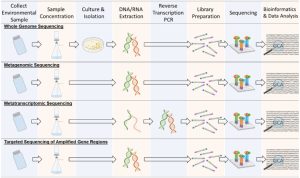
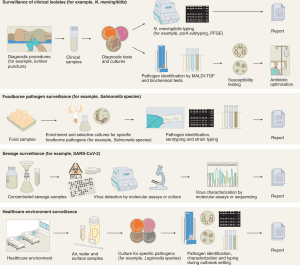
NGS enables simultaneous screening of numerous pathogenic microorganisms, including:
- Legionnaires’ disease associated bacteria
- Campylobacter
- Leptospira
- Norovirus
- Cryptosporidium
Sequencing-based surveillance can support outbreak detection, microbial risk assessment, and public health management.
Drinking Water Distribution Systems
NGS has revealed complex microbial communities in drinking water systems, including biofilms inside distribution pipelines.
Common microbial groups detected include:
- Proteobacteria
- Actinobacteria
- Nitrospirae
- Firmicutes
Studies show that disinfection methods such as chlorination significantly influence microbial composition and reduce pathogen abundance.
However, some opportunistic pathogens may persist even after treatment.
Harmful Algal Blooms and Cyanobacterial Toxins
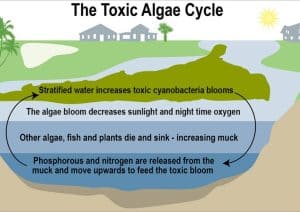
NGS technologies are increasingly used to study cyanobacterial harmful algal blooms (cHABs), which threaten freshwater quality worldwide.
Important cyanotoxins include:
- Microcystin
- Anatoxin
- Cylindrospermopsin
Metagenomics and metatranscriptomics help researchers investigate:
- Toxin biosynthesis pathways
- Bloom persistence
- Ecological interactions
- Toxin degradation mechanisms
Climate change and eutrophication are expected to increase bloom frequency and severity in future aquatic ecosystems.
Tracking Antibiotic Resistance Through Metagenomics
Antibiotic resistance genes (ARGs) are emerging environmental pollutants and important public health threats.
NGS-based metagenomics allows researchers to analyze:
- Antibiotic resistance genes
- Mobile genetic elements
- Resistance dissemination pathways
- Environmental resistomes
Several databases support ARG identification, including:
- Comprehensive Antibiotic Resistance Database
- ResFinder
- BLAD
Environmental reservoirs of antibiotic resistance are now recognized as important contributors to global antimicrobial resistance spread.
NGS and Pollutant Biodegradation
Metagenomics and metatranscriptomics are also widely applied to study microbial degradation of pollutants such as:
- Petroleum hydrocarbons
- Heavy metals
- Chlorinated compounds
- Industrial chemicals
NGS helps identify microbial populations and metabolic pathways involved in bioremediation processes.
These approaches support the development of sustainable environmental cleanup strategies and improve understanding of ecosystem recovery after contamination events.
Future Perspectives of NGS in Water Quality Management
Future developments in sequencing technology are expected to revolutionize environmental monitoring.
Key future directions include:
- Real-time environmental sequencing
- Portable nanopore monitoring systems
- Automated biosensor integration
- Multi-omics ecosystem analysis
- AI-assisted bioinformatics
- Large-scale environmental sequence databases
As sequencing accuracy, speed, and affordability continue to improve, NGS will likely become a routine component of microbial water quality assessment programs worldwide.
Although challenges remain regarding standardization, quantification, and interpretation, NGS provides unprecedented insights into microbial ecology, pathogen surveillance, pollutant biodegradation, and ecosystem health. These technologies are expected to play a critical role in future environmental management, public health protection, and sustainable water resource monitoring.