
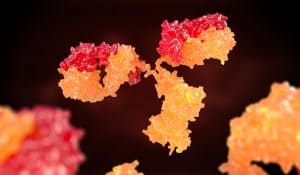
Immunoglobulin G (IgG) antibodies play a central role in regulating immune responses. Beyond their function in pathogen neutralization and immune defense, IgG molecules participate in complex feedback mechanisms that control antibody production, inflammatory reactions, and immune homeostasis. One of the most important components involved in this regulatory network is the Fc gamma receptor IIB (FcγRIIB), a receptor known for its inhibitory effects on immune cell activation.
IgG-mediated feedback regulation is essential for maintaining balanced immune responses and preventing excessive inflammation, autoimmunity, or uncontrolled antibody production. Different IgG subclasses can either suppress or enhance immune responses depending on the type of antigen, receptor interactions, and immunological environment.
FcγRIIB
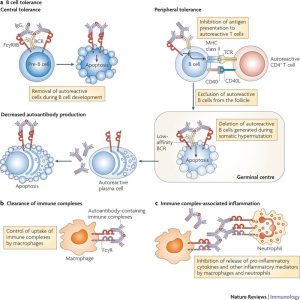
FcγRIIB is the most broadly distributed Fc gamma receptor expressed on immune cells and serves as a major negative regulator of immune activation. This receptor contains an immunoreceptor tyrosine-based inhibitory motif (ITIM), which allows it to suppress signaling pathways initiated by receptors containing immunoreceptor tyrosine-based activation motifs (ITAMs).
Mechanism of FcγRIIB-Mediated Inhibition
FcγRIIB negatively regulates several immune receptors, including:
- B-cell receptor (BCR)
- T-cell receptor (TCR)
- FcγRI
- FcγRIII
- FcεRI
Through these inhibitory interactions, FcγRIIB limits excessive immune activation and contributes significantly to immunological tolerance.
Experimental studies in mice lacking FcγRIIB demonstrated:
- Increased susceptibility to autoimmune diseases
- Enhanced anaphylactic reactions
- Elevated antibody production after immunization with both thymus-dependent and thymus-independent antigens
These findings confirm the essential immunosuppressive role of FcγRIIB in maintaining immune balance.
IgG Binding Characteristics and Immune Complex Formation
FcγRIIB is considered a low-affinity Fc receptor. It does not efficiently bind monomeric IgG molecules circulating freely in plasma. Instead, it recognizes IgG antibodies when they are assembled into immune complexes.
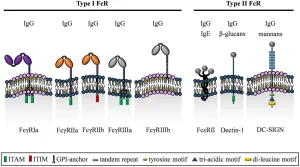
Among murine IgG subclasses:
- IgG1
- IgG2a
- IgG2b
can bind FcγRIIB effectively, whereas IgG3 cannot interact efficiently with this receptor.
The requirement for immune complex formation highlights the importance of antigen-antibody aggregation in Fc receptor-mediated immune regulation.
IgG-Mediated Feedback Suppression of Antibody Responses
Suppressive Antibody Functions
IgG is the classical suppressive antibody isotype involved in feedback inhibition of antibody responses. Studies have also shown suppressive activity for IgM and IgE under specific conditions, particularly in erythrocyte-associated immune responses.
Most experimental models evaluate suppression using erythrocytes or erythrocyte-linked haptens such as trinitrophenyl (TNP). In these studies:
- Antigen-specific IgG is administered intravenously
- IgG interacts with erythrocyte-associated antigens
- Subsequent antibody production is measured through:
- Hemolytic plaque-forming cell assays
- Serum antibody titers
These experiments consistently demonstrate that IgG-mediated suppression is antigen-specific.
Factors Influencing IgG-Mediated Suppression
Several parameters determine the efficiency of IgG-mediated immune suppression:
Antibody Affinity
High-affinity IgG antibodies suppress immune responses more effectively than low-affinity antibodies.
Epitope Density
Antigens with high epitope density promote stronger suppression because multiple antibody molecules can bind simultaneously.
IgG Subclass
All murine IgG subclasses, including IgG3, can mediate suppression even when complement activation is absent.
Proposed Mechanisms of IgG-Mediated Suppression
Three major hypotheses have been proposed to explain how IgG suppresses antibody responses.
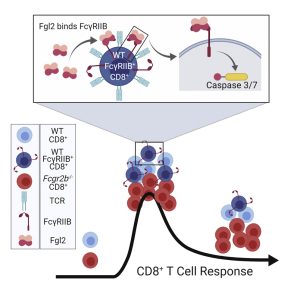
1. FcγRIIB-Mediated Negative Signaling
According to this model, IgG-antigen immune complexes simultaneously bind:
- The B-cell receptor (BCR)
- FcγRIIB
This co-crosslinking generates inhibitory intracellular signals that suppress B-cell activation and antibody production.
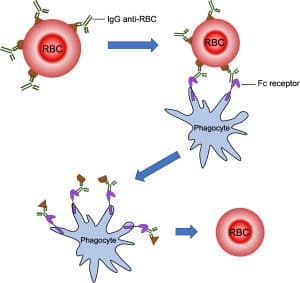
2. Enhanced Phagocytic Clearance
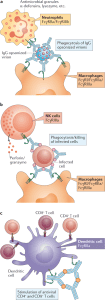
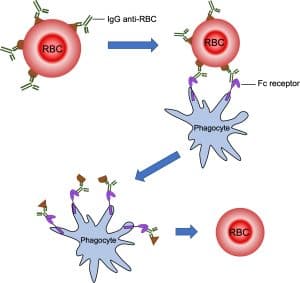
Another hypothesis proposes that IgG-coated antigens are rapidly removed from circulation through Fc receptor-mediated phagocytosis by macrophages and other phagocytic cells.
Rapid elimination of antigen would reduce exposure to B cells and prevent initiation of antibody responses.
3. Epitope Masking
The epitope masking hypothesis suggests that IgG antibodies physically cover antigenic epitopes, preventing B-cell recognition and activation.
This mechanism does not necessarily require Fc receptor engagement or complement activation.
Fc Dependence of IgG-Mediated Suppression
To determine whether Fc receptor interactions are essential for suppression, researchers investigated the activity of F(ab’)2 fragments, which lack the Fc region.
Results from different studies were contradictory:
- Some studies showed poor suppressive activity
- Others demonstrated nearly normal suppression
Possible explanations include:
- Rapid degradation of F(ab’)2 fragments due to lack of FcRn-mediated protection
- Contamination with intact IgG molecules
These inconsistencies complicated interpretation of Fc dependence in immune suppression.
Evidence from Fc Receptor Knockout Models
Researchers further investigated suppression using genetically modified mice lacking various Fc receptors.
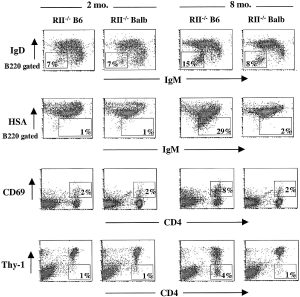
FcγRIIB-Deficient Mice
Unexpectedly, IgG-mediated suppression remained fully functional in mice lacking FcγRIIB.
This finding suggested that FcγRIIB is not absolutely required for suppression of antibody responses against erythrocyte antigens.
FcRγ Chain-Deficient Mice
Mice deficient in the FcRγ chain, which is required for FcγRI and FcγRIII signaling, also showed normal suppression.
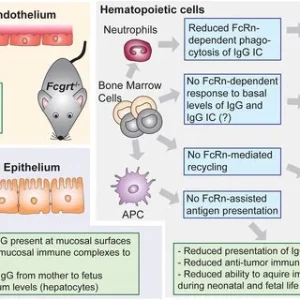
FcRn-Deficient Mice
Suppression was similarly preserved in mice lacking the neonatal Fc receptor (FcRn).
Together, these experiments demonstrated that:
- FcγRIIB
- FcγRI
- FcγRIII
- FcRn
are not individually essential for IgG-mediated suppression of erythrocyte antibody responses.
 Epitope Masking as the Most Likely Mechanism
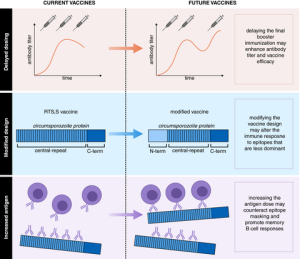
Because suppression persists despite the absence of Fc receptors and complement activity, epitope masking is currently considered the most plausible explanation for IgG-mediated suppression in vivo.
According to this model:
- IgG antibodies bind antigenic determinants
- B-cell receptors cannot access masked epitopes
- Antibody responses fail to initiate efficiently
This mechanism aligns with most experimental observations involving erythrocyte-associated antigens.
IgG-Mediated Enhancement of Antibody Responses
Enhancement Rather Than Suppression
Interestingly, IgG antibodies can also enhance immune responses under certain conditions.
When soluble protein antigens such as:
- Keyhole limpet hemocyanin (KLH)
- Ovalbumin (OVA)
- Bovine serum albumin (BSA)
- Tetanus toxoid
are administered together with antigen-specific IgG antibodies, antibody production against the carrier protein increases significantly.
Fcγ Receptor Dependence of Enhancement
Unlike suppression, enhancement depends strongly on activating Fc receptors.
Experiments showed that:
- Enhancement is impaired in FcRγ-deficient mice
- FcγRI likely plays a major role
- Complement activation is not required
These findings indicate that activating Fc receptors are critical for IgG-mediated enhancement.
Proposed Mechanism of Enhancement
The most accepted mechanism involves improved antigen presentation.
IgG-antigen immune complexes are:
- Efficiently internalized by Fc receptor-positive antigen-presenting cells
- Processed and presented to T helper cells
- Followed by stronger B-cell activation and antibody production
This process amplifies adaptive immune responses, particularly during secondary immune reactions.
FcγRIIB Regulation of Enhanced Responses
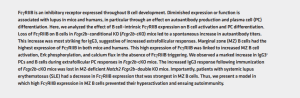
Although IgG can enhance antibody production, FcγRIIB prevents excessive amplification.
Studies using FcγRIIB-deficient mice demonstrated dramatically exaggerated antibody responses after immunization with IgG-antigen complexes.
For example:
- Wild-type mice showed moderate enhancement
- FcγRIIB-deficient mice produced massively elevated antibody titers
These observations confirm that FcγRIIB functions as a physiological brake that limits excessive humoral immune activation.
Clinical Significance of IgG Feedback Regulation
Prevention of Hemolytic Disease of the Newborn
One of the most important clinical applications of IgG-mediated suppression is prevention of RhD alloimmunization.
Administration of anti-RhD IgG antibodies to Rh-negative mothers:
- Masks fetal RhD-positive erythrocytes
- Prevents maternal B-cell activation
- Reduces the risk of hemolytic disease of the newborn
This strategy represents a major achievement in clinical immunology and transfusion medicine.
Role in Autoimmunity and Immune Homeostasis
FcγRIIB deficiency increases susceptibility to autoimmune diseases, demonstrating the importance of inhibitory Fc receptor signaling in immune tolerance.
Balanced interactions between:
- Suppressive IgG pathways
- Enhancing IgG pathways
- Fc receptor signaling
- Antigen presentation
are essential for preventing pathological immune activation.
Conclusion
IgG antibodies regulate immune responses through multiple distinct mechanisms. These mechanisms include:
- Suppression of antibody production through epitope masking
- Enhancement of immune responses through Fc receptor-mediated antigen presentation
- Negative regulation via FcγRIIB inhibitory signaling
Although FcγRIIB plays a critical role in limiting immune activation, many IgG-mediated suppressive effects occur independently of classical Fc receptor pathways. Current evidence strongly supports epitope masking as the dominant mechanism underlying IgG-mediated suppression of erythrocyte antibody responses.
The dual ability of IgG antibodies to either suppress or enhance immune responses highlights their central role in immunoregulation, vaccine responses, immune tolerance, and autoimmune disease prevention.