

Human immunodeficiency virus type 1 (HIV-1) drug resistance remains one of the major challenges in global HIV treatment and prevention programs. International public health strategies, including the Joint United Nations Programme on HIV/AIDS (UNAIDS) 90-90-90 targets, were developed to reduce HIV transmission and improve viral suppression among infected individuals. These objectives aimed to ensure that most people living with HIV were diagnosed early, received effective antiretroviral therapy (ART), and achieved sustained viral load suppression. Expanding access to ART and preventive interventions such as pre-exposure prophylaxis (PrEP) has significantly reduced HIV-related morbidity and mortality worldwide. However, the widespread use of antiretroviral drugs (ARVs) has also increased the emergence of HIV drug resistance (HIVDR).
Drug resistance develops when HIV continues replicating in the presence of insufficient antiretroviral drug concentrations. This process promotes the selection of resistant viral strains capable of surviving therapeutic pressure. Two major forms of resistance are recognized: acquired drug resistance (ADR), which develops during treatment, and transmitted drug resistance (TDR), which occurs when resistant viruses are transmitted to newly infected individuals. The growing prevalence of resistant HIV strains represents a major concern for long-term treatment success, especially in low- and middle-income countries (LMICs), where access to resistance testing and advanced treatment options may be limited.
Modern HIV treatment mainly relies on five major classes of antiretroviral drugs:
- Nucleoside reverse transcriptase inhibitors (NRTIs)
- Non-nucleoside reverse transcriptase inhibitors (NNRTIs)
- Protease inhibitors (PIs)
- Integrase strand transfer inhibitors (INSTIs)
- CCR5 antagonists
Although several older ARVs are no longer commonly used, current therapeutic regimens are designed to maximize antiviral potency while minimizing the risk of resistance development.
Mechanisms of HIV-1 Drug Resistance
HIV-1 possesses an extraordinary capacity for genetic variation. This variability primarily results from:
- Frequent replication errors generated by reverse transcriptase
- Viral recombination events
- Rapid viral replication cycles
- Accumulation of mutations during chronic infection
Even though infection often begins with a single viral variant, multiple genetically distinct viral populations known as quasispecies rapidly emerge after infection. These viral populations continuously evolve, increasing the probability of resistance-associated mutations.
Drug-resistant variants are selected when viral replication persists during incomplete or poorly suppressive therapy. Several factors influence resistance development, including:
- Duration of viral replication under drug pressure
- Genetic barrier of the antiretroviral drug
- Number of mutations required for resistance
- Impact of mutations on viral fitness
- Patient adherence to therapy
Some antiretroviral drugs require only one mutation to induce high-level resistance, while others require multiple mutations. Drugs with higher genetic barriers generally maintain efficacy longer and are more resistant to virological failure.
Drug resistance mutations (DRMs) are classified into:
- Primary mutations: directly reduce drug susceptibility
- Accessory mutations: improve viral fitness or enhance resistance levels
Cross-resistance frequently occurs within the same ARV class because many mutations affect several drugs simultaneously. In contrast, cross-resistance between different ARV classes is uncommon.
Poor adherence remains the leading cause of resistance emergence. Inadequate adherence exposes HIV to subtherapeutic drug concentrations, enabling resistant variants to dominate. Fixed-dose combinations (FDCs) and routine viral load monitoring programs significantly reduce the risk of resistance development by improving treatment consistency and enabling earlier detection of virological failure.
HIV-1 Drug Resistance Testing
Drug resistance testing plays a critical role in optimizing HIV treatment strategies. Two major testing approaches are currently used:
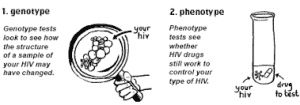
Phenotypic Resistance Testing
Phenotypic assays directly measure the susceptibility of patient-derived viruses to antiretroviral drugs in cell culture systems. Drug susceptibility is commonly expressed as the inhibitory concentration required to reduce viral replication by 50% (IC50).
The resistance level is determined by comparing the patient’s viral IC50 with that of a reference wild-type strain. Results are expressed as fold-change values.
Phenotypic testing is highly informative but has several limitations:
- High cost
- Long turnaround time
- Technical complexity
- Limited accessibility in LMICs
For these reasons, phenotypic testing is generally reserved for:
- Drug development
- Research studies
- Complex clinical resistance cases
Genotypic Resistance Testing
Standard genotypic resistance testing (SGRT) is currently the most widely used method in clinical practice. It identifies specific resistance-associated mutations within HIV genes such as:
- Reverse transcriptase
- Protease
- Integrase
SGRT mainly uses Sanger sequencing technology to analyze viral RNA extracted from patient plasma samples.
This approach offers several advantages:
- Faster results
- Lower cost than phenotypic assays
- Easier implementation
- High clinical utility
However, conventional genotypic testing generally detects only mutations present in at least 20% of the viral population.
Next-Generation Sequencing (NGS)
Next-generation sequencing technologies provide ultra-deep analysis of viral populations and can detect low-frequency resistant variants below the 20% detection threshold of standard sequencing methods.
NGS offers several benefits:
- Higher sensitivity
- Lower per-sample sequencing cost
- Large-scale testing capability
- Improved detection of minority variants
Low-abundance resistant variants identified by NGS may contribute to treatment failure, especially with NNRTI-based regimens. Nevertheless, interpretation guidelines for these highly sensitive techniques remain under development.
NGS is considered particularly promising for LMICs because wide-sequencing strategies may significantly reduce testing costs.
Interpretation of Drug Resistance Tests
Interpreting HIV resistance profiles is highly complex because resistance mutations occur in numerous combinations and may affect multiple drugs differently.
Several factors must be considered:
- Mutation patterns
- Previous treatment history
- Cross-resistance profiles
- Viral fitness
- Drug potency
- Clinical response data
Some mutations produce only minor resistance and may not compromise treatment efficacy if the remaining drugs in the regimen remain active.
Databases such as the Stanford HIV Drug Resistance Database provide resistance interpretation algorithms that assign penalty scores to mutations and estimate susceptibility to individual ARVs.
NRTI Resistance Mutations
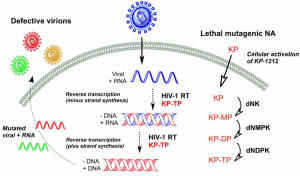
NRTI resistance occurs through two principal mechanisms:
- Reduced incorporation of NRTIs into viral DNA
- Excision of incorporated NRTIs from viral DNA
The most common NRTI mutation is:
M184V/I
This mutation:
- Causes high-level resistance to lamivudine (3TC) and emtricitabine (FTC)
- Reduces susceptibility to abacavir
- Decreases viral fitness
- Increases susceptibility to zidovudine (AZT) and tenofovir (TDF)
Other important NRTI mutations include:
- K65R
- L74V/I
- Y115F
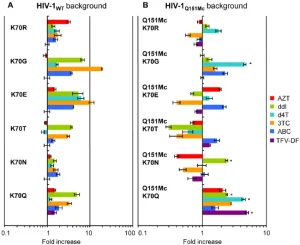
- Q151M complex
- Thymidine analogue mutations (TAMs)
TAMs significantly contribute to cross-resistance among multiple NRTIs and can severely compromise treatment efficacy when accumulated.
NNRTI Resistance Mutations
NNRTIs generally have low genetic barriers to resistance. A single mutation can often cause high-level resistance.
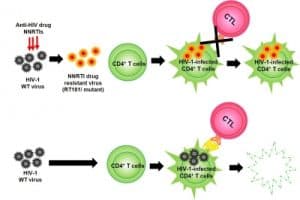
Common NNRTI resistance mutations include:
- K103N
- Y181C
- G190A/S
- V106M
- Y188L
Cross-resistance is particularly common within the NNRTI class because many mutations affect several drugs simultaneously.
Second-generation NNRTIs such as etravirine and rilpivirine possess improved resistance profiles, although resistance may still develop through multiple mutations.
Protease Inhibitor Resistance
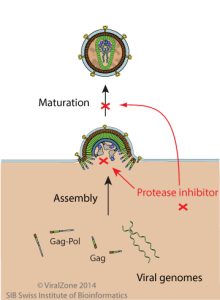
Boosted protease inhibitors such as:
- Lopinavir/ritonavir (LPV/r)
- Atazanavir/ritonavir (ATV/r)
- Darunavir/ritonavir (DRV/r)
have high genetic barriers to resistance.
PI resistance generally requires multiple mutations, making resistance less frequent compared with NRTIs and NNRTIs.
Major PI resistance mutations include:
- V32I
- I50V/L
- I84V
- V82A/T/F
- M46I/L
Poor adherence remains the principal cause of virological failure in PI-based regimens.
Integrase Inhibitor Resistance
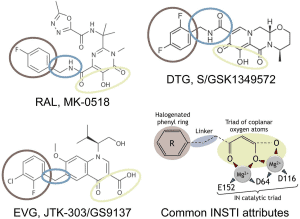
Integrase strand transfer inhibitors (INSTIs) are among the most potent modern antiretroviral drugs.
Important INSTIs include:
- Raltegravir (RAL)
- Elvitegravir (EVG)
- Dolutegravir (DTG)
Resistance pathways for raltegravir commonly involve:
- N155H
- Q148H/R/K
- Y143C/R
Dolutegravir exhibits a much higher genetic barrier to resistance and usually requires multiple mutations before significant resistance emerges.
HIV Tropism and CCR5 Antagonists
Maraviroc is a CCR5 antagonist that blocks HIV entry into target cells by preventing interaction with the CCR5 receptor.
Before maraviroc therapy, viral tropism testing is necessary to determine whether the patient harbors:
- CCR5-tropic (R5) virus
- CXCR4-tropic (X4) virus
Phenotypic and genotypic assays are available for tropism determination.
Effect of HIV Subtypes on Drug Resistance
Although subtype B predominates in North America and Europe, most global HIV infections involve non-B subtypes.
Certain resistance mutations emerge more readily in specific subtypes because of differences in codon usage and viral genetic background.
Examples include:
- V106M in subtype C
- G190S in subtype A
- V82M in subtype G
Subtype-related differences may influence resistance evolution and treatment outcomes.
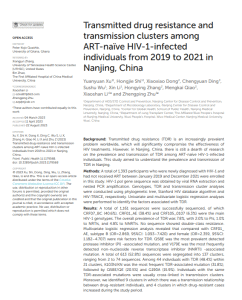
Transmitted Drug Resistance (TDR)
Transmitted drug resistance occurs when individuals acquire HIV strains already carrying resistance mutations.
TDR prevalence varies geographically:
- Higher rates in high-income countries
- Lower but increasing rates in LMICs
Common transmitted mutations include:
- K103N
- Y181C
- M184V
- TAMs
Routine resistance testing at diagnosis is strongly recommended in many high-income settings to optimize initial therapy selection.
Acquired Drug Resistance (ADR)
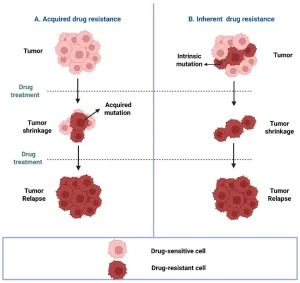
Acquired drug resistance develops during ART due to:
- Poor adherence
- Delayed detection of virological failure
- Suboptimal regimens
- Drug interruptions
Most patients with virological failure develop multiple resistance mutations over time.
Resistance patterns vary according to the treatment regimen used. NNRTI resistance usually appears early, while PI resistance tends to emerge later and less frequently.
Management of ADR often requires switching to fully active second-line or salvage regimens guided by resistance testing results.
PrEP and Drug Resistance
Pre-exposure prophylaxis using tenofovir-based regimens has dramatically reduced HIV transmission risk in high-risk populations.
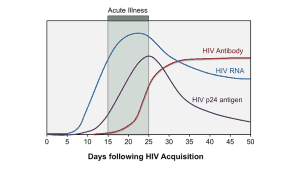
Drug resistance associated with PrEP remains relatively rare and is primarily observed in individuals who initiate PrEP during unrecognized acute HIV infection.
The most common PrEP-associated mutations include:
- M184V/I
- K65R
Routine HIV testing before and during PrEP use is essential to minimize resistance emergence.
HIV Drug Resistance Surveillance
Global HIVDR surveillance programs are essential for monitoring resistance trends and guiding public health interventions.
The World Health Organization recommends:
- Surveillance of pretreatment drug resistance (PDR)
- Monitoring acquired resistance
- Early warning indicators
- Resistance testing in infants
Resistance surveillance data are increasingly important for updating national treatment guidelines and preserving long-term ART effectiveness.
Conclusion
The rapid expansion of antiretroviral therapy has transformed HIV infection into a manageable chronic disease. Nevertheless, HIV drug resistance remains a major obstacle to sustained viral suppression and long-term treatment success.
Understanding the molecular mechanisms of resistance, resistance-associated mutations, cross-resistance patterns, and diagnostic strategies is essential for optimizing HIV management. Advanced resistance testing technologies, improved adherence strategies, routine viral load monitoring, and coordinated global surveillance systems are critical for controlling the spread of resistant HIV strains.
As ART access continues to expand worldwide, especially in low- and middle-income countries, ongoing monitoring and adaptation of treatment strategies will remain fundamental to preserving the effectiveness of current and future antiretroviral therapies.